
29 Jun Netaji Bose: how Kolkata’s favorite son escaped the city
Netaji Subhas Bose’s dramatic escape, under the noses of the alarmed British, is part of Kolkata folklore
On the night of 16th January 1941, Netaji Subhas Bose, evading the watchful eye of his British captors, escaped from Kolkata. He would never return to the city again.
Netaji had been jailed by the English for his political activities. But when he went on hunger strike, the British were forced to move him out from the Presidency Jail to the Bose residence on Elgin Road (now Netaji Bhawan), where he was placed under house arrest.
Even with the strict police surveillance around him, Netaji had made up his mind to leave India. He believed that the World War provided India the best opportunity to fight for its freedom from outside, and to seek help from Britian’s enemies to liberate India.
From Netaji Bhawan on Elgin Road, plotting an escape…
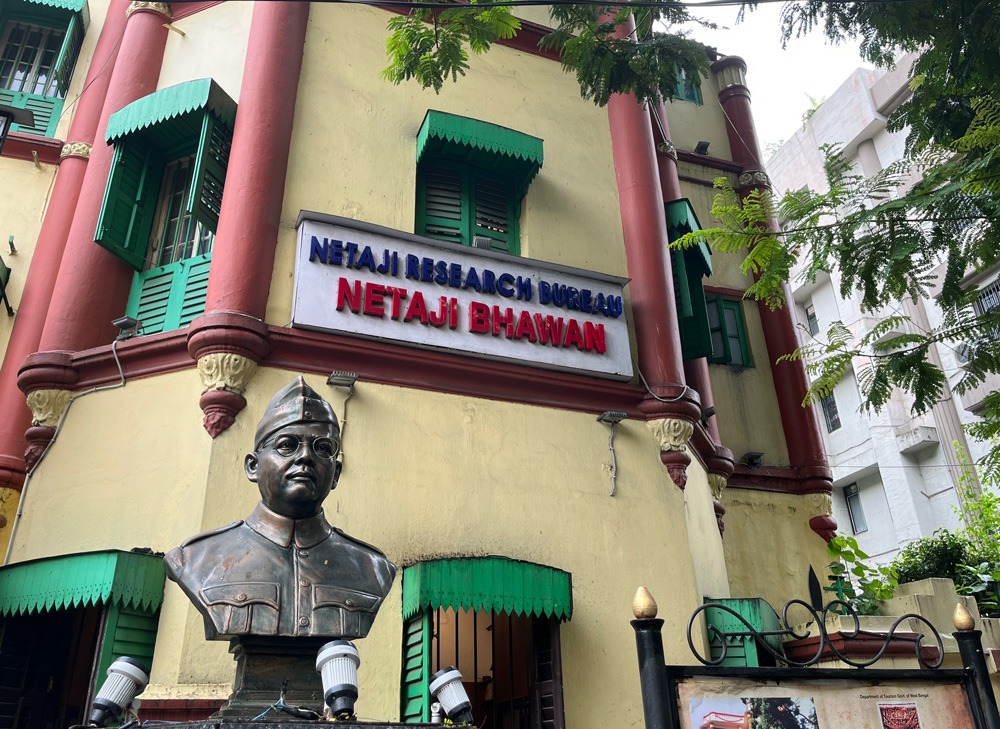
The home on Elgin Road from where Netaji escaped from the British, never to return
A key accomplice was Mian Akbar Shah, a trusted comrade and prominent freedom fighter from the north-west. Bose invited Akbar Shah to visit his Kolkata home, and together they planned the escape route. He would go from Kolkata to Peshawar, then to Kabul, and onwards to Moscow.
As per the plan, Netaji would disguise himself as Mohammed Ziauddin, a Muslim insurance salesman. Bose’s nephew, Sisir Bose, was made part of the plan; it was the twenty-year old Sisir who would drive Netaji out from Kolkata. Sisir Bose even made a trial-drive from Kolkata to Burdwan and back, checking if the escape car was good enough for the plan.
But first, Netaji had to look the part. Mian Akbar Khan, accompanied by Sisir, visited Kolkata’s top departmental store at the time, Wachel Molla in Dharamtala. They shopped for pathan suits, bought a bag with the initials M.Z, and had visiting cards made to complete the disguise (“Mohammed Ziauddin, Travelling Inspector, The Empire of India Life Insurance Company Ltd”).
Intrigued, I decided to follow Akbar Khan and Sisir’s footsteps by locating the Wachel Molla store. I had read that it still exists, though a shadow of its former self, being riven by family feuds and court cases. Under a frayed sign that read “Wachel Molla and Grandsons” I found a small store selling electronic goods, almost lost in the din of banks and other establishments surrounding it.
It was difficult to imagine that this was, in the 1940s, Kolkata’s most happening store. Spread over two floors and with over three hundred employees, this was where the top British officers shopped, along with celebrities like Satyajit Ray, Dilip Kumar, Raj Kapoor and Nargis. It was also from where Netaji had made his last purchases, before leaving Kolkata.
Escape in the dead of night, and the drive to Gomoh
At 1.30am on the morning of January 17, Netaji Bose sat in the back seat of his escape car (a black German Wanderer, which is now displayed behind glass at Netaji Bhawan) and, with his nephew Sisir Bose at the wheel, made good his escape. He was never to return to Kolkata.
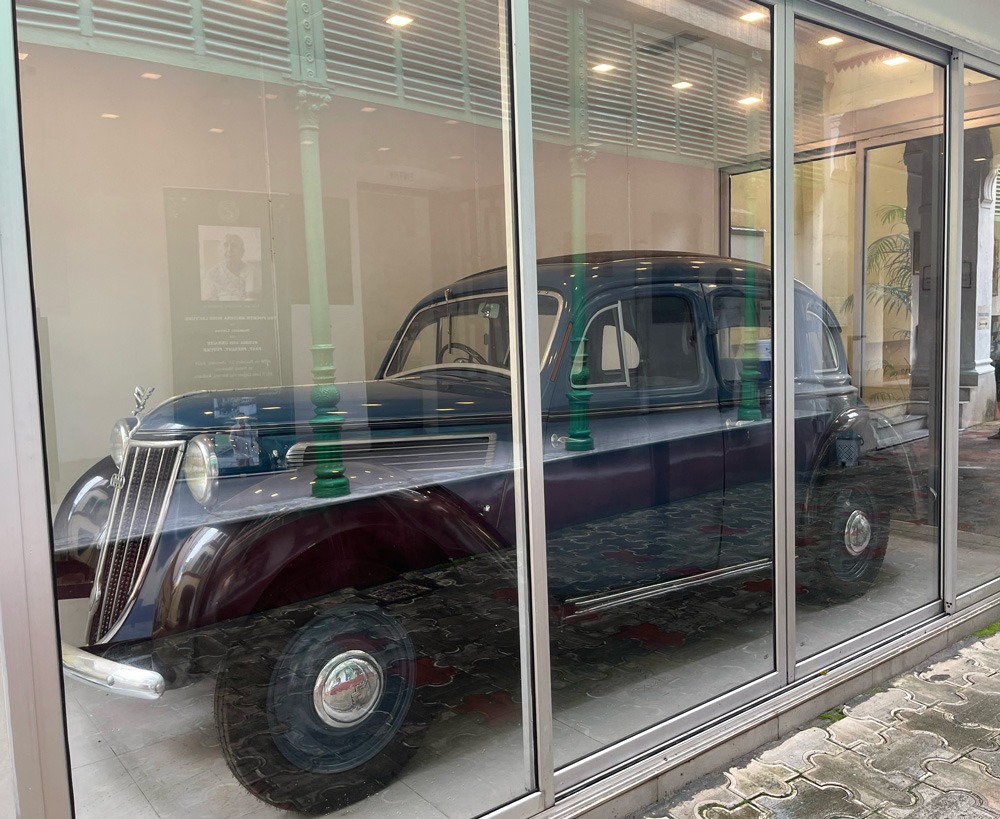 The historic Wanderer car in which Sisir Bose drove Netaji to Gomoh for the first leg of his escape (a German car to escape to Germany)
They drove several hours to Gomoh (now in Jharkhand) from where Bose, disguised as Ziauddin, boarded the Delhi-Kalka Mail. At Delhi, Bose took the Frontier Mail to Peshawar. He was received at Peshawar by his partner Akbar Shah, spent the first night at the Taj Mahal Hotel (which has, unfortunately, since been demolished) and then moved to the home of another accomplice, Abad Khan.
Poignantly, when Krishna Bose – Netaji’s niece in law and a member of Parliament – visited Pakistan as part of a delegation in 2005, she re-traced Netaji’s escape route at Peshawar; meeting the family of Abad Khan, seeing the train station where Netaji arrived, and visiting the site of the demolished Taj Mahal hotel, in who’s room number 6 Netaji had spent a night in disguise.
Surviving dangerous Kabul
As Bose did not know the local Pashto language, he took on the role of a deaf mute Pathan and, accompanied by his escort Bhagat Ram Talwar, made the arduous journey, through tribal territory, from Peshawar to Kabul. They posed as uncle and nephew, pilgrims visiting the holy dargah at Adda Sharif in search of a cure.
Netaji spent a dangerous and frustrating two months in Kabul, connecting with the Russian, German, and Italian embassies. The city was crawling with agents of the British and Afghan governments. An Afghan spy, convinced that Bose and Talwar were smugglers, insisted on taking them to the police station and needed to be placated with regular bribes, including Talwar’s gold wristwatch.
After much clandestine back and forth between the envoys, Bose was handed a passport in the name of Italian Orlando Mazzotta, and under this identity, made his exit from Kabul to Samarkand, then to Moscow and Berlin.
Netaji Bhawan at Elgin Road
The Bose home on 38/2 Elgin Road, from where Netaji made his dramatic escape, is now the Netaji Bhawan and houses the Netaji Research Institute.
I entered its green and yellow gate, walking along the paved driveway from where he had made his escape. The Wanderer W24 sedan, the escape car that had rolled down this very driveway, with Sisir Bose at the wheel and Netaji on the back seat disguised as Ziauddin, was displayed prominently behind a glass protective case. The car has recently been restored by Audi.
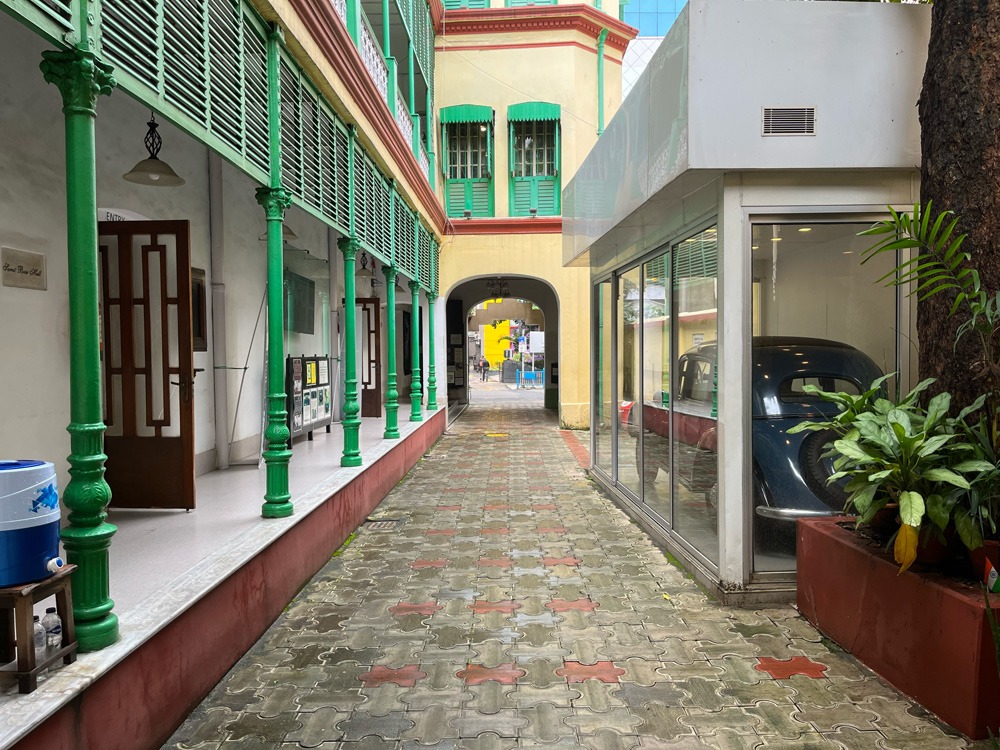 Through those gates he drove, on the night of January 16, 1941. The escape car can be seen on the right
I climbed to the first floor, which housed Netaji’s bedroom. His bed, an umbrella and towel stand. Old leather suitcases. His slippers and grooming brushes. Typical red-oxide floors. A bulbous old style ceiling fan. Wooden switch panels on the wall, with classic big, black and round light switches that reminded me of my ancestral home in Patna.
This is where, reclining on his pillows on a December afternoon, Netaji had taken his young nephew Sisir into confidence, with the sentence “Tumi ki amar jonno ekta kaj korte parbe?” (Can you do some work for me?)
Outside Netaji’s bedroom were red colored footsteps etched on the floor that followed the route of his escape.
Also on the same floor is Netaji’s study room. As President of the Indian National Congress, he received his guests here. The walls of the room are painted in the tricolor of the Indian flag. There is Netaji’s desk and nameplate. A large armchair for him. Wooden chairs and a sofa set for visitors.
I saw the narrow flight of stairs that Netaji and Sisir had walked down for the final escape. The lights in his room had been left on as a decoy, while uncle and nephew made good their escape.
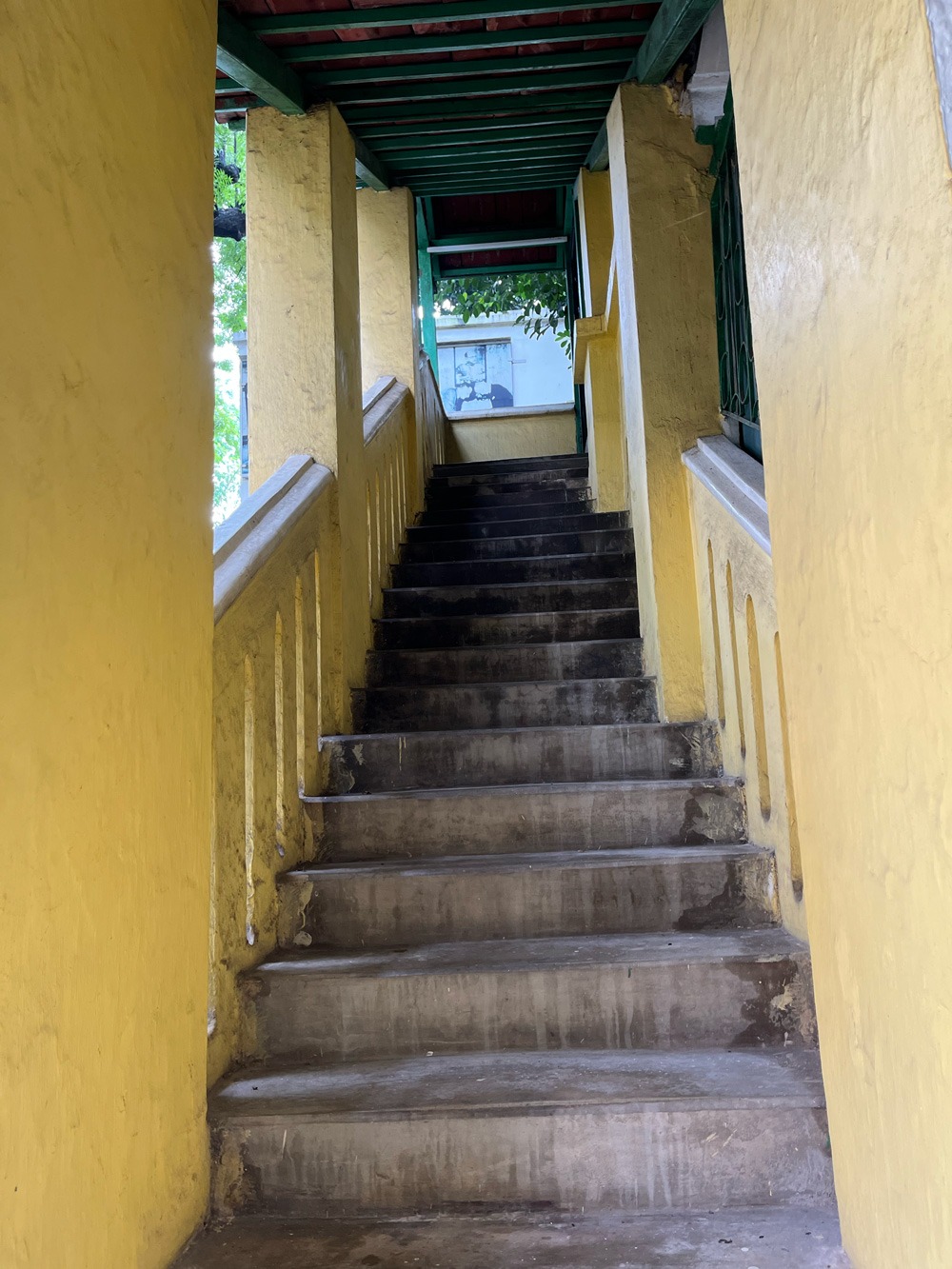 Netaji’s last steps on Kolkata soil…he used this staircase for his secret departure from the house on the night of Jan 16
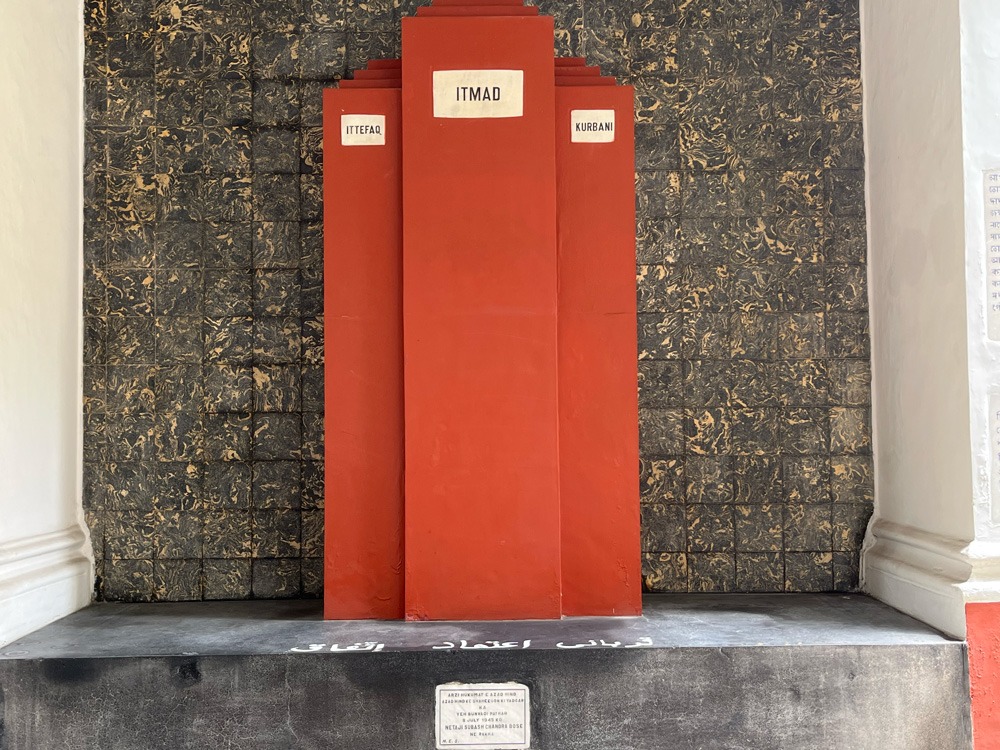 A replica of the Singapore Martyrs Memorial, with the Azad Hind Fauj motto etched on the three pillars.
Netaji had built the Martyrs Memorial at Singapore’s Esplanade Park in July 1945, to honor martyrs of the Indian National Army. It was demolished by the British army, on the orders of Lord Mountbatten when they re-occupied the island, to prevent the spread of INA ideals.
Beside it, a wall plaque describes – in Netaji’s words – a vision of the free India he wanted to create.
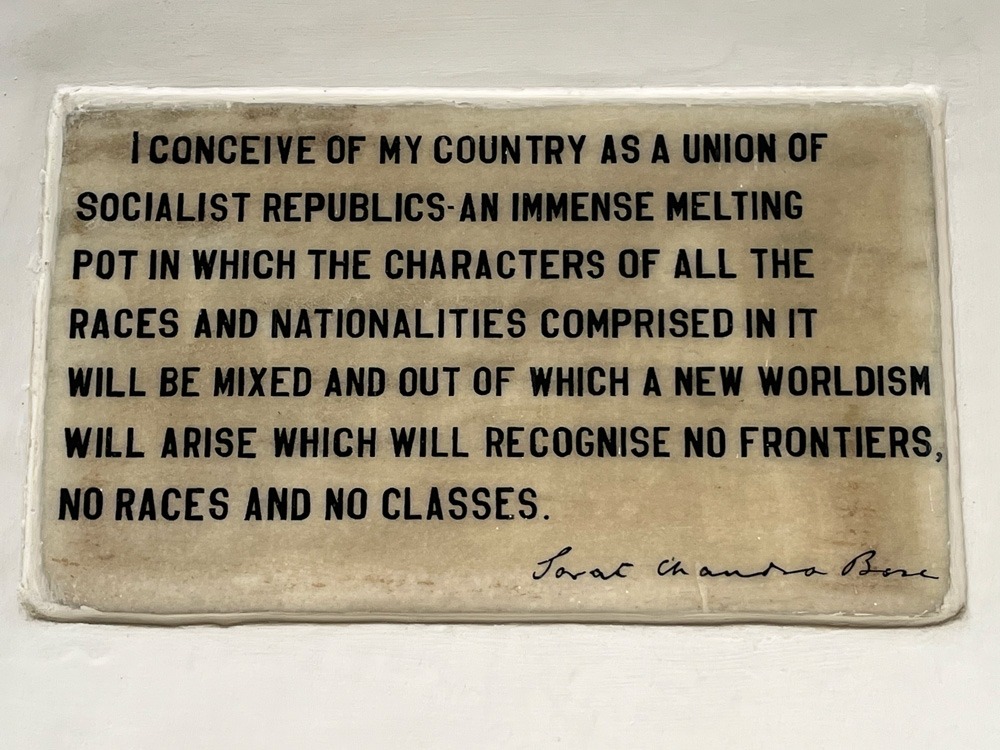 Netaji’s vision of the India he wanted to create
How to get here:
Information:
- You will need an entry ticket (Rs 50)
- Timings are 11am to 6pm (closed Mondays)
- A visit would take about 2 hours
- If you require parking, try the basement parking of Forum Mall
Sources:
- “Subhas Chandra Bose and Indian freedom struggle”. By Muller and Bhattacharjee.
- “The Lost Hero. A biography of Subhas Bose”. By Mihir Bose. Published by Quartet Books.
- Mian Akbar Shah and His Role During the Struggle for Freedom”. By Dr. Syed Wiqar Ali Shah
