
13 Mar Five things you didn’t know about the Taj
The world’s most famous building has a few secrets up its sleeve
The last time I visited Taj Mahal, i counted about ten different languages being spoken around me. And it got me wondering whether Shah Jahan would have ever imagined that visitors from Germany, Italy, China, Korea, France, Thailand would travel from across the world to view his monument?
That’s when I had the idea of jotting down some lesser-known aspects about this building; facts that are not so obvious to the casual tourist but reveal themselves only slowly and if specifically looked for.
Because, whether this is your first trip to the Taj or the fifth, your first view of the building will always overwhelm. It leaves one in awe, just to think that some master-builder in medieval times had the ability to conceive of such immense beauty, and then was able to execute with this attention to detail, and in such a grand setting. Every element in this monument has been put in place with choice and purpose. Including these lesser known secrets…
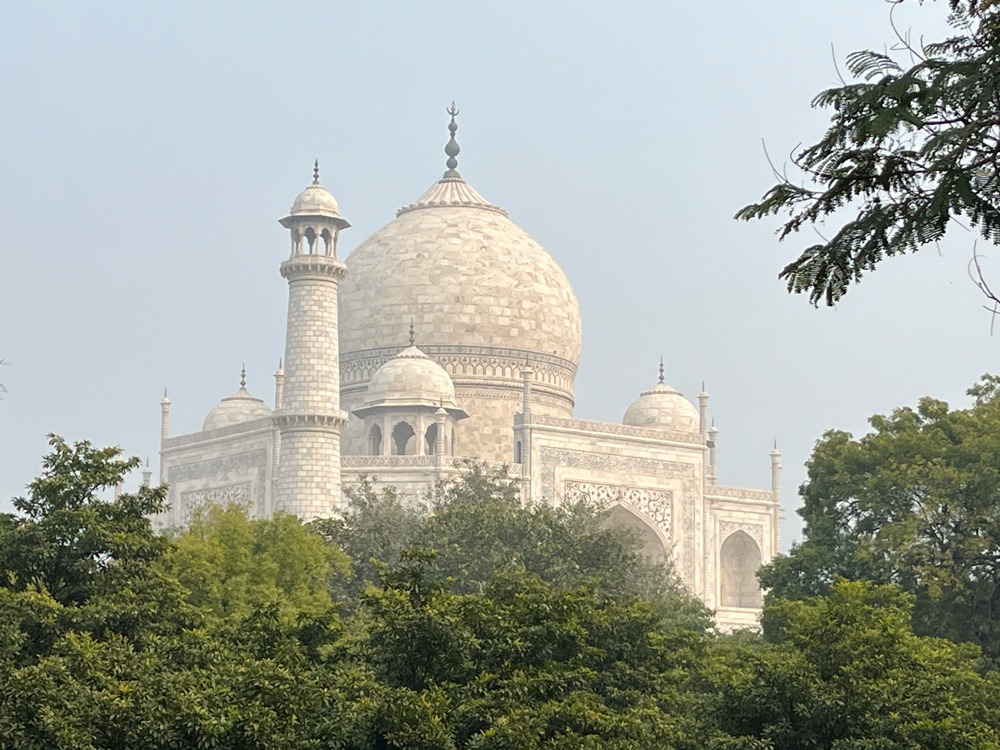
Peeping through the treetops; secrets of the world’s most famous building
1. Mumtaz Mahal was buried three times
Mumtaz Mahal (1593-1631), in who’s memory this “monument to love” was built, died not in Agra but in Burhanpur, a city 900 kilometers away.
Born as Arjumand Banu to a family of Persian nobles at Agra, Mumtaz (she was given this name after her marriage to Shah Jahan) came from an impressive lineage. She was the niece of Empress Noor Jahan and granddaughter of Itmad ud daulah, the vazir of Emperor Jehangir, who’s own fine mausoleum is also an Agra must-see.
When she was just fourteen, Arjumand got engaged to Prince Khurram (the future Shah Jahan, himself only fifteen at the time) at Lahore. The engagement lasted a very long five long years, during which Khurram even married another lady, while Arjumand Banu waited patiently at Lahore. But things changed in 1611, when Jehangir wed her aunt, Noor Jahan. Suddenly, whatever obstacles there were to Arjumand’s marriage were removed and she, who was then nineteen years old, married Prince Khurram at Agra in 1612 with celebrations lasting a month.
For the next many years, even as Shah Jahan remained ceaselessly on the move to far corners of his kingdom, Mumtaz was his constant companion. They had fourteen children, many of whom (Aurungzeb, Dara Shukoh, Jahanara, Roshanara) shaped the destiny of Hindustan.
To suppress rebellions in the area, Shah Jahan had to move to Burhanpur – considered at the time a gateway to the Deccan. Mumtaz was with him and pregnant with her 14th child. In 1631, giving birth to her last child Gauhar Begum, she died.
Mumtaz was first buried at Burhanpur, where Shah Jahan would visit her grave every Friday to recite the fateeha*. But this was always a temporary arrangement. Six months after her death, in December 1631, her body was carried in a solemn procession to Agra accompanied by her son Shah Shuja, her best friend and lady-in-waiting Sita-un-Nisa, and a caravan of soldiers.
Meanwhile, Shah Jahan had acquired a garden in Agra, on the banks of the Yamuna, from Raja Jai Singh and work was started on constructing the Taj Mahal. Mumtaz was buried in the north-west corner of the garden while the Taj was being prepared. In 1643, on her twelfth urs, Mumtaz Mahal’s body was lowered into her burial chamber, for the third and final time, at the center of the Taj.
2. Masons working at the original site have left their “remember me” signatures
This is cute.
As one walks along the red sandstone terrace of the Taj Mahal – towards the mehmaan khana – keep your eyes on the ground. You will notice small squiggles of different shapes chiseled on to the floor slabs. These masonry marks are signatures left behind by workers from the original construction.
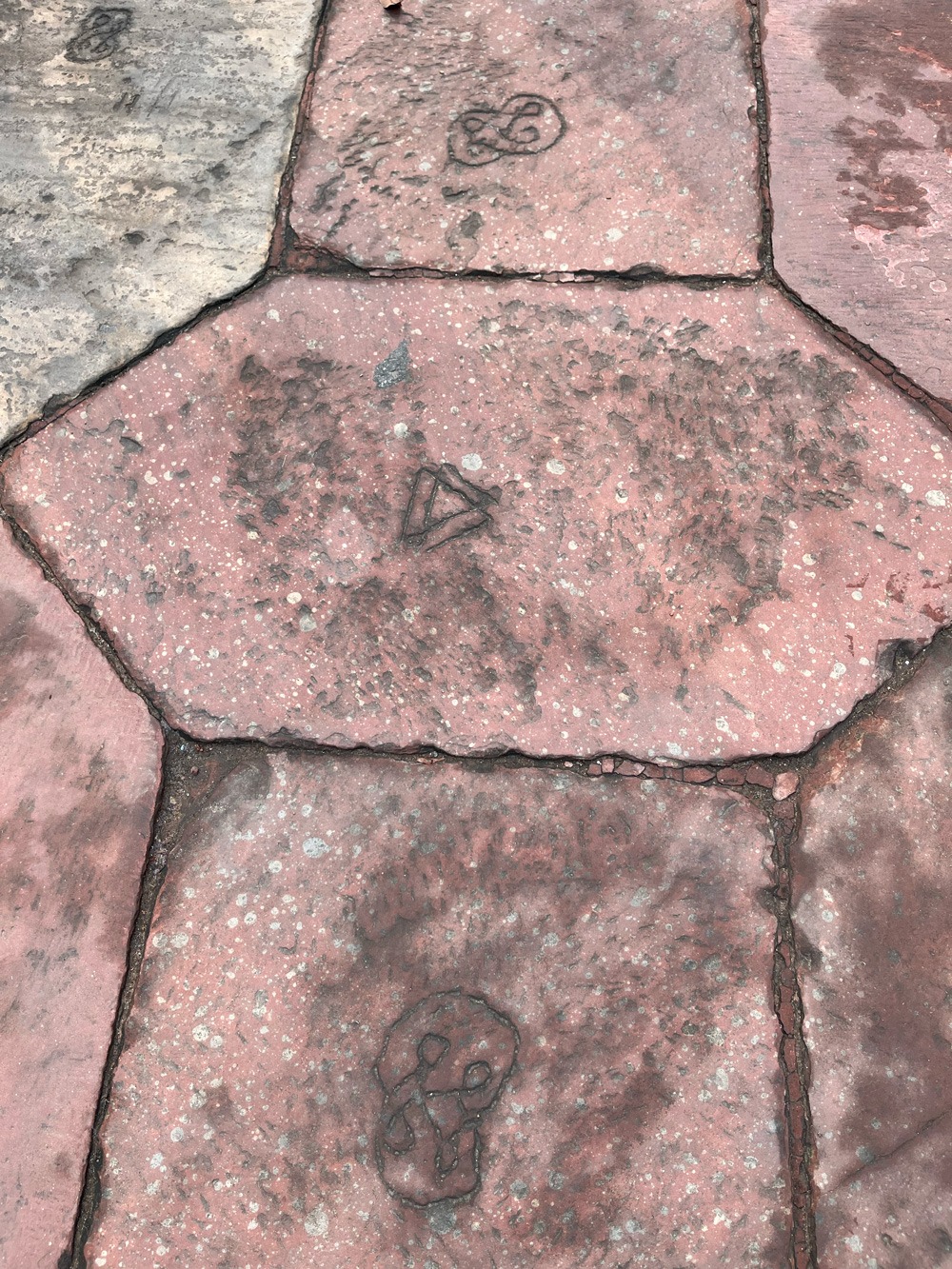
Squiggles left behind by mason’s hands from the 17th century original construction
3. The Taj Mahal is built of brick. Only the cladding is of marble
Most visitors to the Taj assume that the building is made entirely of marble. But the main structural core is of brick, only the outer surface is clad in marble.
This makes the building lighter and more stable, and more economical. While still achieving the iconic all-marble appearance.
It helps that the quality of material used was the finest… “marble from Makrana, red sandstone from Fatehpur Sikri, turquoise from Tibet, lapus lazuli from Afghanistan”*. The Taj Museum on these grounds (established by Lord Curzon in 1906) has samples of the precious stones used in the inlay work from around the world. Interestingly, it also displays copies of farmans (royal orders), dated 1632, from Shah Jahan to Jai Singh asking for arranging the supply of Makrana marble and artisans, and providing details of the payment along with the transport charges!
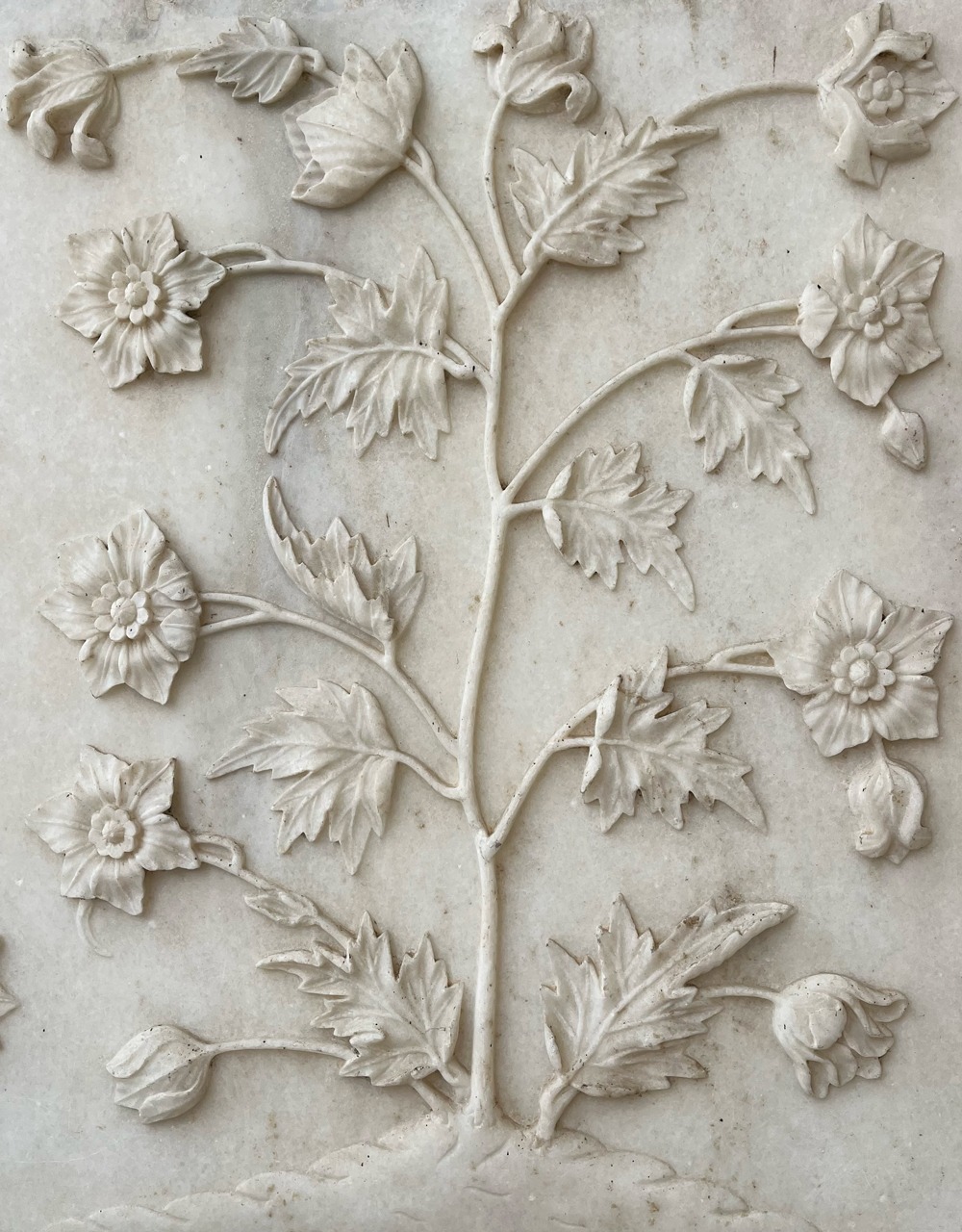
Flowering plants carved on Taj Mahal’s walls symbolize a garden of paradise. The marble is still as white and fresh looking as when it was first used.
Another massive engineering feat by the Taj’s architects was the laying of the foundations for such a colossal structure on a sandy riverbank, where the soil was soft and unstable. For this, more than a thousand wells were drilled in the riverbank right down to the bedrock. The wells were supported with massive wooden pillars while the sand was scooped out and filled with rocks and stones to anchor the building. A terrace was then raised fifty meters above the riverbank to protect against floods.
Even this exact riverfront location – on a bend of the Yamuna – was chosen with great care. It is at this river-bend that the thrust of the water is the least; for the greater the thrust, the shakier the foundation becomes.
4. The Taj has not one, but two domes (and how on earth is it cleaned?)
The Taj Mahal has a double dome, and together they weigh 1200 tones.
What we see is the outer surface. But there is also an inner dome, with a space of nine meters between the two.
This system of double domes was used often in Mughal and Persian architecture, for both practical and aesthetic reasons. The distance between the two domes provides a kind of thermal insulation, and reduces heat transfer, keeping the building interiors cool. While the outer dome helps the overall structure look taller and more majestic.
If you look closely, you can see small hooks embedded on the dome’s surface. These are not original but were added during British rule and by the ASI to make it easier for workers to climb the dome for cleaning and repair. As the marble is very tall and smooth, it makes scaffolding difficult to anchor without the safety of these hooks.
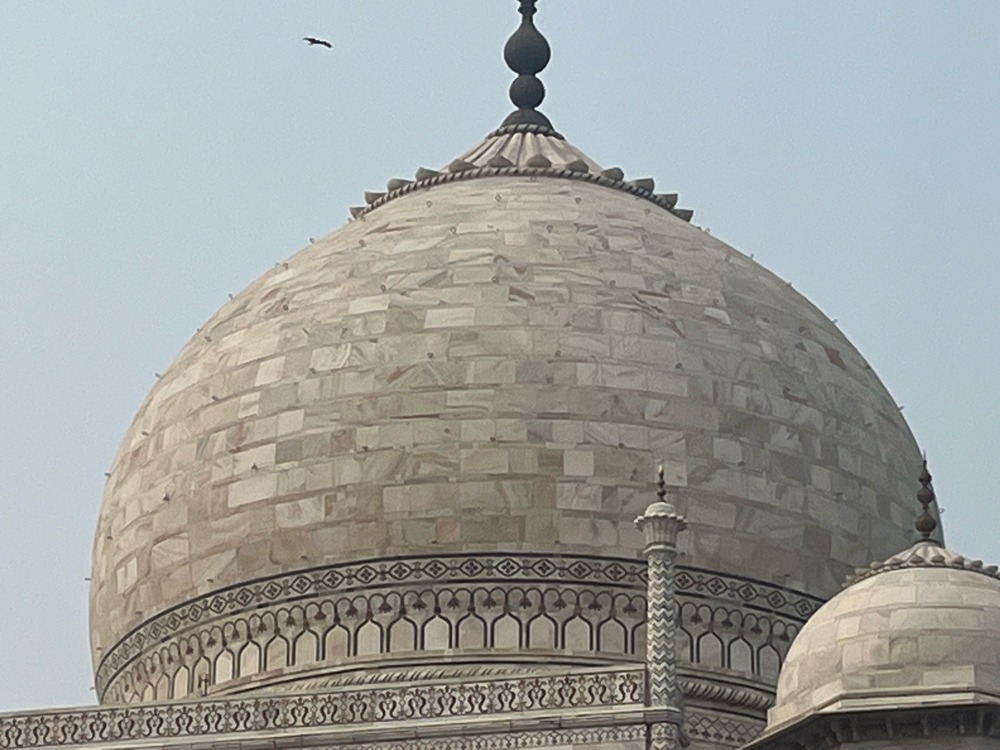
Look closely now…those metal hooks are how the Taj’s crowning glory is cleaned and repaired. See also the inverted lotus shape and finial on top.
The dome also tells us a lot about the cultural synthesis of the time.
Crowing the top of the dome is an inverted lotus shape with decorative edgings – that most eternal of all Indian designs, which was used extensively in many domes of the Mughal era.
And surmounting this as a final flourish is a bronze finial, which is like a celestial marker of cultural integration. The finial is designed with an Islamic crescent, above which is a kalash shape from Hindu tradition, and below which is what looks like a coconut, symbolizing purity and divine offerings across cultures.
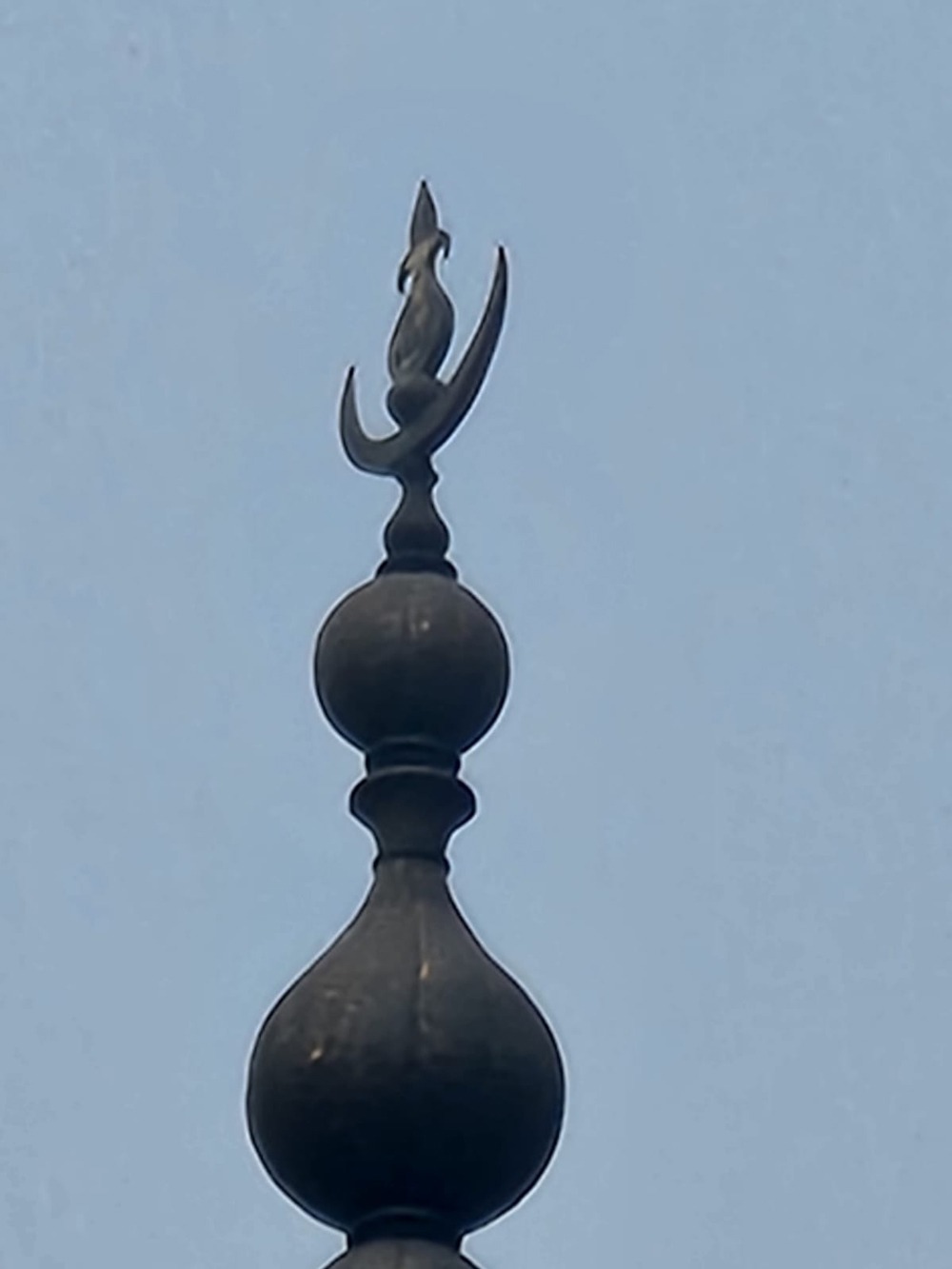
A close-up of the bronze finial at the very top of the Taj Mahal; a magnificent symbol of the cultural synthesis of the age
5. It’s not just Mumtaz; there are other wives of Shah Jahan also buried here
Yes, Mumtaz was the emperor’s primary queen (their union “tethered by the building of the most glorious monument to love the world has ever seen”), but Shah Jahan was also married to other women, and often for political reasons.
Close to the west gate of Taj Mahal is the Saheli Burj area. Here, his other begums lie quietly in their modest sandstone tombs, just a stone’s throw away from their privileged sister.
Three of Shah Jahan’s wives are interred here. Kandhari begum, his first wife, was a descendent of the royal Safavids of Iran, and Shah Jahan married her in 1609 while he was still engaged to Mumtaz. Akbarabadi Mahal, his third wife, was also from a family of high Mughal connections being the granddaughter of Abdur Rahim, one of Akbar’s navratnas. And Fatehpuri Mahal, his fifth wife, best remembered for building the iconic Fatehpuri Mosque at Delhi’s Chandni Chowk.
But it is the fourth tomb that gets the most attention; that of the “exceptionally talented” Sita-un-Nisa, Mumtaz Mahal’s closest friend and lady-in-waiting. This is what gives Saheli Burj its name (“saheli” meaning friend).
Born in Iran to a family of eminent physicians, Sita-un-Nisa was the sister of Abu Talib who was a poet at Jehangir’s court. When her husband died, Talib arranged for his sister to come to India where she joined the service of Mumtaz Mahal.
Sita-un-Nisa and Mumtaz Mahal became best friends. While she had no children of her own, Sita-un-Nisa took the responsibility of being Princess Jahanara’s tutor (she did a fine job, given how proficient her pupil became in the arts) and after her friend’s death, bought up Mumtaz’s youngest child Gauhar Begum.
As the padshah begum, Mumtaz was a wealthy lady with a yearly allowance of one million rupees. She appointed Sita-un-Nisa as the head of the zenana and entrusted her with continuing the tradition of helping destitute women, who would plead their cases every day, and granting them allowances for marriages and other needs.
Fittingly, it was Sita-un-Nisa who accompanied her best friend’s body from Burhanpur to Agra. So, when she herself died at Lahore, Shah Jahan arranged for her to be bought to this site as well and buried close to her soul mate for eternity.
Sources:
- “Daughters of the Sun: Empresses, Queens & Begums of the Mughal Empire”. By Ira Mukhoty. Published by Aleph Book Company.
- “Agra: The Architectural Heritage”. By Lucy Peck. Published by Roli Books, 2008
- “The Travelers Guide to Agra”. By Satya Chandra Mukerji. Published by Sen & co, 1892
